Driving in the Netherlands: a guide for UK drivers
Once you roll off the ferry, the Netherlands is one of the easiest countries in Europe to drive in – excellent roads, clear signs and short distances. But a few things catch UK drivers out, from the daytime motorway limit to the sheer number of cyclists. Here is everything we have learned from doing these crossings ourselves, so you can set off prepared.
Not sure which crossing to take yet? Find your route on the homepage.
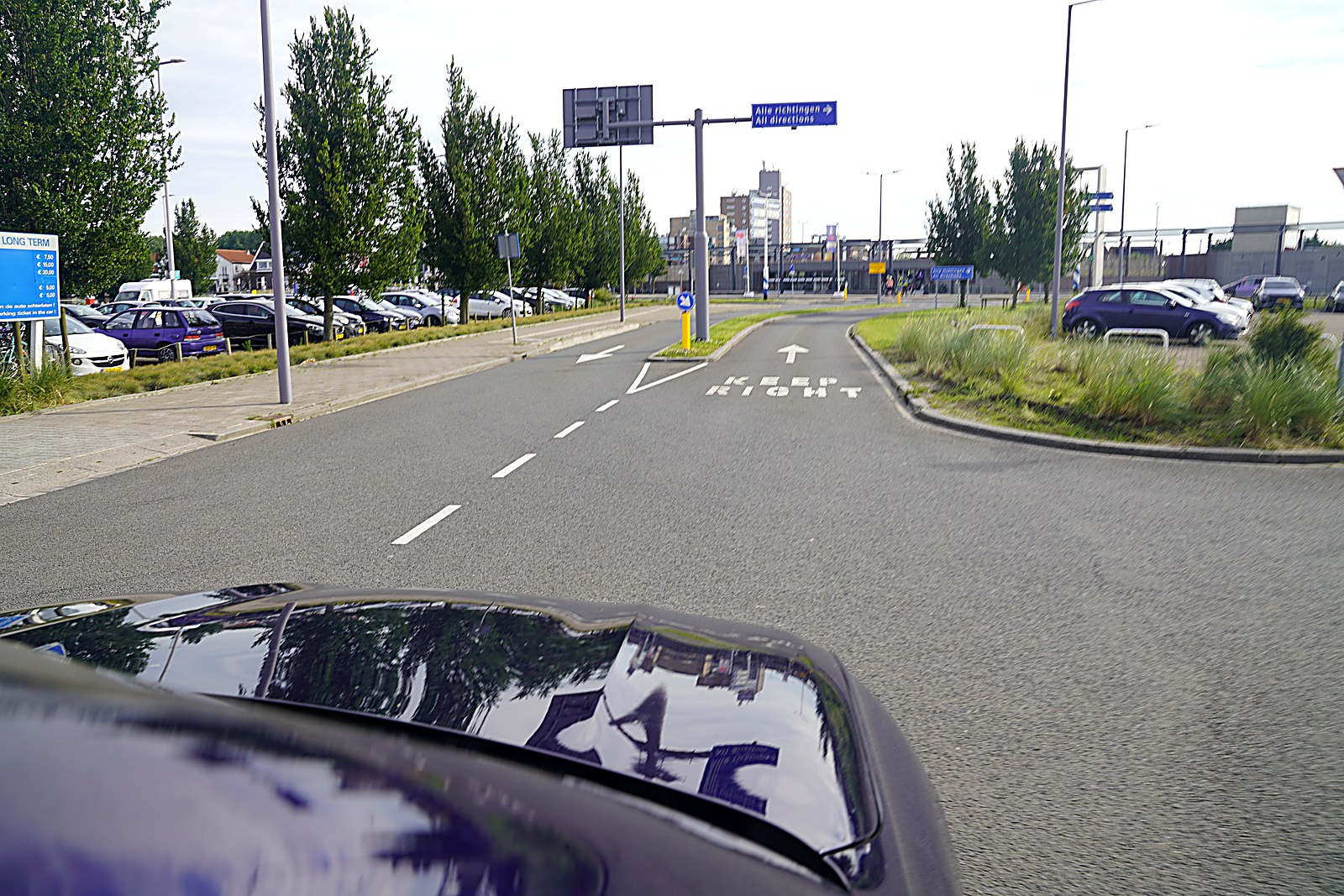
Getting used to driving on the right
In the Netherlands you drive on the right, with the steering wheel on the “wrong” side if your car is from the UK. Most people adjust within an hour, but the first stretch off the ferry is when mistakes happen. From our own trips, here is what helps:
- Keep repeating “stay right” to yourself in the first hour – it really does build the habit. On the ferries you can also buy window stickers in the shops.
- Where you can, follow a local car. Driving behind someone who knows the roads is far easier than working out every junction yourself.
- If you have a passenger, ask them to actively watch and call out, especially at junctions and roundabouts.
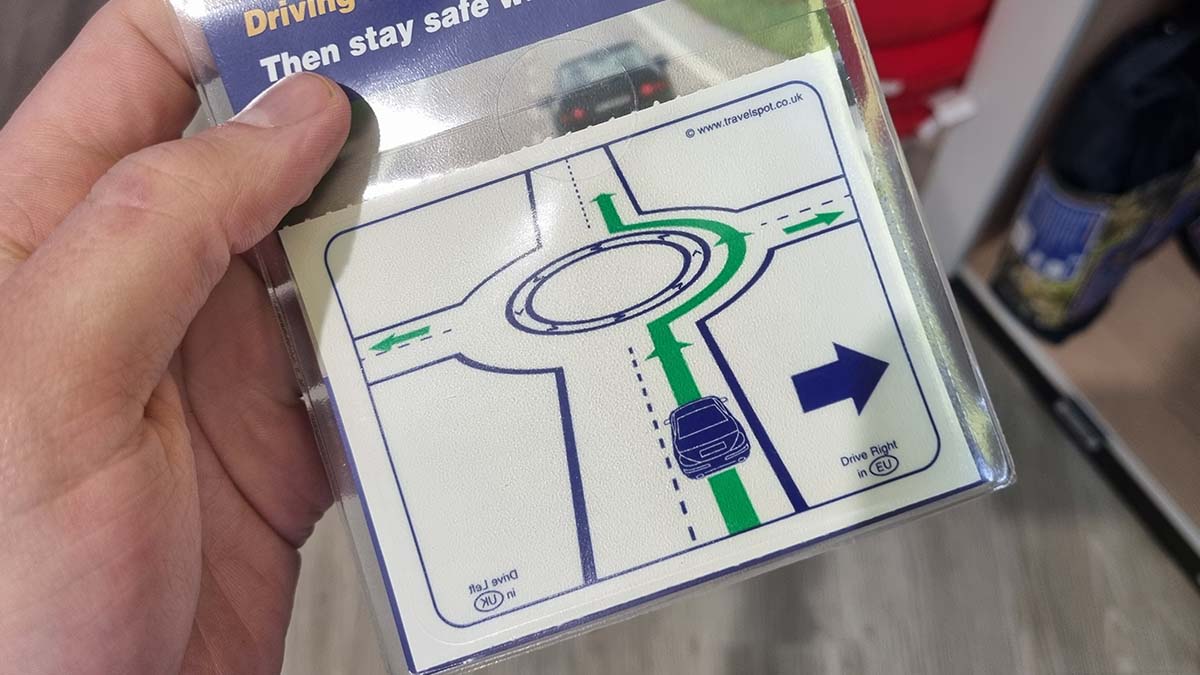
- At roundabouts, traffic goes anti-clockwise – the opposite of the UK. Look left as you approach.
- Preview the first junctions on Google Street View before you travel, so the layout off the ferry feels familiar.
- Stay calm and don’t let yourself be rushed. Most slip-ups happen when people panic.
Driving a hire car? Then the wheel is on the left and you’ll change gear with your right hand – an automatic can make life easier. The indicators and wipers are often reversed too, so don’t be surprised if you set off with the wipers going.
Watch for cyclists – this is the Netherlands
If there is one thing that defines driving here, it is bikes. The Netherlands has more bicycles than people, and cyclists are everywhere, with their own lanes (fietspaden) running alongside most roads. UK drivers are simply not used to this volume of cycle traffic.
- Cyclists going straight on usually have priority over cars turning across them. Always check your nearside before turning right, and your mirror before turning at all.
- When you park, look behind you before opening the door – the “Dutch reach” (opening with your far hand so you turn to look) exists for a reason.
- At junctions you will often see separate bike traffic lights and crossings. Give way to them as you would to pedestrians.
- Mopeds and e-bikes use the cycle lanes too, and move faster than you expect.
Take it slowly in towns until you have the rhythm of it. Once you tune in to the cyclists, Dutch towns are genuinely relaxing to drive in.
Speed limits: mind the daytime motorway rule
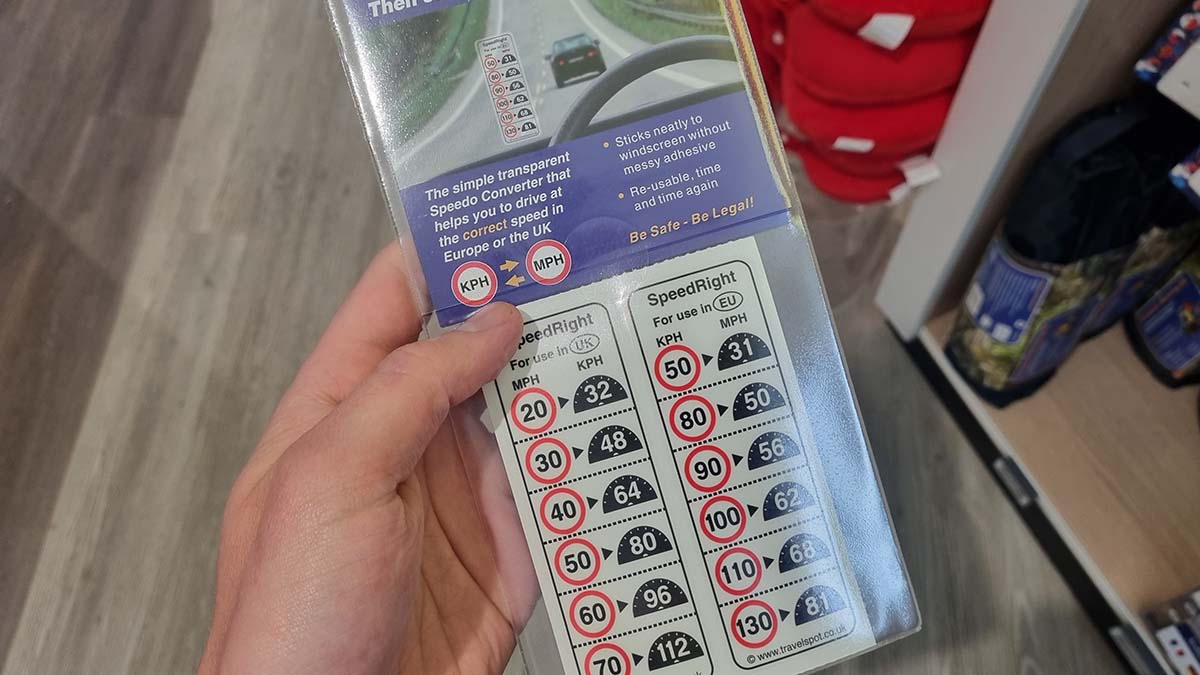
Speeds are in kilometres per hour, not miles. One mile is about 1.6 km, so 50 mph is roughly 80 km/h. Many drivers buy a small conversion sticker (sold on the ferry) for the dashboard.
The thing that catches UK drivers out is the motorway limit. On Dutch motorways (autosnelwegen) the limit is just 100 km/h during the day, from 6am to 7pm, rising to 120 or 130 km/h between 7pm and 6am. It was introduced to cut emissions, it is well signed, and cameras enforce it strictly.
As a rough guide otherwise: main roads out of town are 80 or 100 km/h, built-up areas 50 km/h, and town centres and residential streets often 30 km/h. When in doubt, assume the lower limit.
What you must carry in the car
Here the Netherlands is refreshingly relaxed, and not far off what you are used to at home. There is no legal requirement for foreign cars to carry a warning triangle or hi-vis vest. That said, carrying them is still sensible, and you will want them if you plan to drive on into other countries.
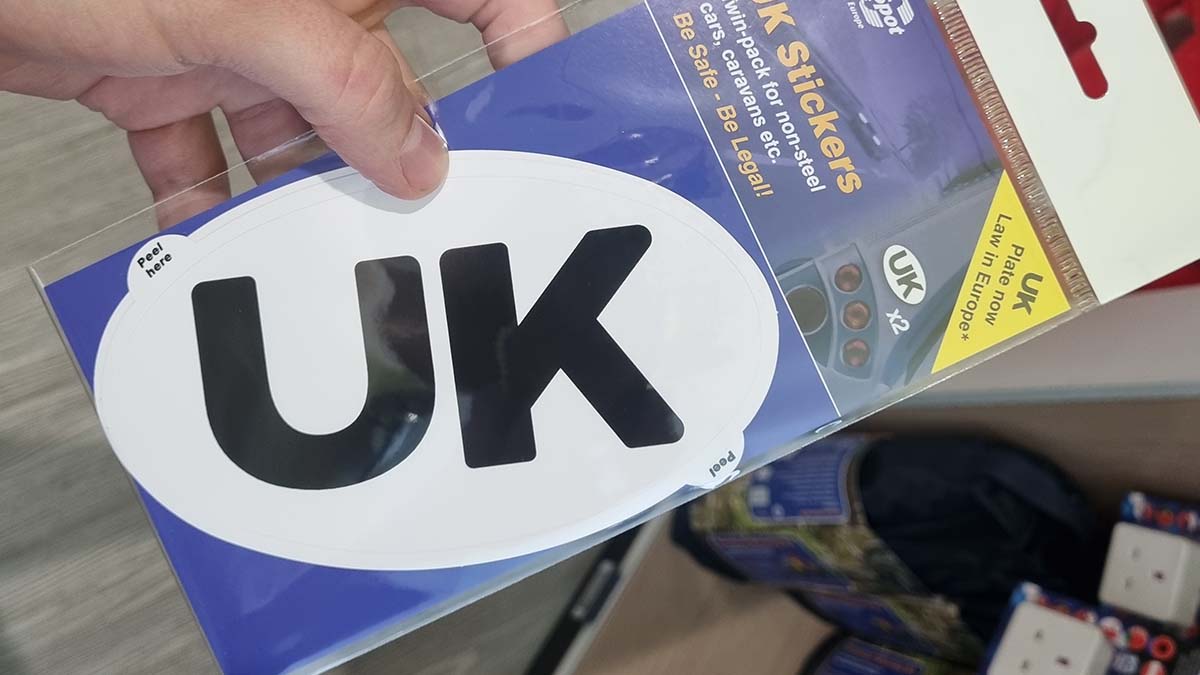
- UK sticker – unless your number plate already shows “UK” with the flag. (The old “GB” is no longer valid.)
- Headlamp beam deflectors – to stop your lights dazzling oncoming traffic. Or adjust the beam via your car’s controls if it has that option.
- Documents – full UK driving licence, V5 logbook, insurance certificate and passport.
- Warning triangle and hi-vis vest – not required in the Netherlands, but compulsory in many other European countries, so worth packing if you travel on.
- First-aid kit – not required, but always sensible.
- Spare bulbs and a spare pair of glasses if you drive with them.
- Breakdown cover – the ANWB runs roadside assistance, with yellow emergency phones every couple of kilometres on motorways.
Environmental zones: easier than you might fear
Low-emission zones sound daunting, but in the Netherlands the rules are simple for most visitors. Dutch environmental zones (milieuzones) for passenger cars apply only to older diesel vehicles.
- If you drive a petrol, LPG or electric car, you can enter every current zone freely – no registration, no sticker, nothing to arrange.
- Only older diesel cars are restricted, in cities such as Amsterdam, Rotterdam, The Hague, Utrecht and Arnhem.
- Crucially, there is no pre-registration for foreign cars – nothing to arrange before you arrive. The zones are enforced by camera against the vehicle’s emission class.
- Newer zero-emission zones are appearing from 2025 onwards, but for now these apply only to vans and trucks, not to private cars.
If you do drive an older diesel, check the official municipal portals before entering a city, as standards tighten over time. Many visitors simply use a Park & Ride on the edge of town and take the tram or train in.
The drink-drive limit is lower than the UK
The Dutch drink-drive limit is 0.05% (50mg of alcohol per 100ml of blood), lower than the 0.08% in England, Wales and Northern Ireland, though the same as Scotland. For drivers in their first five years on the road it is stricter still, at just 0.02%.
Police test regularly, and fines for foreign drivers are enforced. The safest approach, as ever, is simply not to drink at all before driving.
Tolls: almost none
Good news for your budget: Dutch motorways are free for cars. There is no vignette or motorway toll to buy. The only two places you pay are tunnels – the Westerscheldetunnel in the south-west and the Kiltunnel near Dordrecht – and neither sits on the main route out of Rotterdam, Hook of Holland or IJmuiden, so most visitors never meet a toll at all.
Don’t forget your headlights
UK cars are set up for driving on the left, so your headlights are angled to light the left verge – which dazzles oncoming traffic once you’re driving on the right. Fit headlamp beam deflectors (cheap stickers, sold in the ferry shop) before you set off, or adjust the beam manually if your car allows it. Some newer cars have a simple setting for “driving on the right”.